
The Supreme Court of India has expressed concern over media reporting in the death case of former model-turned-actor Twisha Sharma, urging restraint to ensure a fair and impartial investigation.

Former Tehelka editor Tarun Tejpal has been convicted by the Bombay High Court's Goa bench in a 2013 rape case and sentenced to 10 years' rigorous imprisonment, overturning his 2021 acquittal. Tejpal claims he is a "political victim" and will challenge the verdict in the Supreme Court, alleging his journalistic career has been targeted.

The Cockroach Janta Party (CJP) led a large protest in Mumbai, demanding the resignation of Chief Election Commissioner Gyanesh Kumar. CJP leader Abhijeet Dipke announced a further protest at Delhi's Jantar Mantar on October 10 if Kumar does not step down, citing alleged voter deletions and irregularities in recent elections. The protest, which saw participation from various activists and public figures, also called for freezing voter lists and abolishing the 2023 law on Election Commissioner appointments.

The Supreme Court has informed the Centre that it will closely monitor the steps taken to curb NEET examination paper leaks, emphasising that 'ad hocism has caused trouble for years' and demanding a comprehensive overhaul of the examination process.

Former Tehelka editor-in-chief Tarun Tejpal has been convicted and sentenced to ten years in jail by the Bombay High Court in a 2013 rape case, overturning a trial court's acquittal and criticising its 'perverse' reasoning.

The Supreme Court on Monday asked the Uttar Pradesh government to apprise it about the possibility of setting up an SIT to probe the alleged embezzlement of donations at the Ram temple in Ayodhya and cautioned the litigants not to politicise the issue.

AAP leader Manish Sisodia has informed the Delhi High Court that he will not pursue his excise case in Justice Swarana Kanta Sharma's court, following a similar decision by party chief Arvind Kejriwal.

Kejriwal is seeking the recusal of a Delhi High Court judge in his liquor policy case, alleging a conflict of interest due to the judge's family ties to the central government's legal representation.

The Centre has supported the restriction on women of menstruating age entering Kerala's Sabarimala temple, arguing that the Supreme Court's 2018 judgement assumes male superiority.
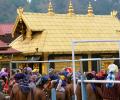
The Supreme Court is hearing petitions related to discrimination against women at religious places, including the Sabarimala temple. A nine-judge bench is examining the scope of religious freedom and the exclusion of women based on age and menstrual status.

Retiring Supreme Court Justice Sanjay Karol stated in his farewell address that judges are not gods and will not get every judgement right, emphasising the need for humility and the ability to see the real person behind every litigant.
The Supreme Court has agreed to constitute a special bench to address the Centre's plea regarding the applicability of its March 11 judgment on OBC creamy-layer criteria to candidates of the Civil Services Examination (CSE) 2025. The Department of Personnel and Training (DoPT) seeks to proceed with service allocation for 958 recommended candidates based on the creamy-layer determination applied before the verdict, citing potential unequal treatment and disruption to training schedules.

The Supreme Court asserted that the right to peaceful protest is 'absolutely guaranteed' and an agitation cannot justify 'police excesses' or a 'lathi charge,' while agreeing to hear pleas concerning alleged police brutality against students protesting the NEET paper leak.

The Supreme Court has clarified that 'criminal antecedents' for NEET paper leak protesters refer only to grave and heinous offences, allowing state governments to withdraw FIRs against students not involved in such serious crimes. This comes after the Centre's commitment to not pursue cases against most protesting students.

The Goa government on Tuesday moved the Supreme Court seeking enhanced sentence for journalist Tarun Tejpal in the 2013 sexual assault case, contending the case warrants imprisonment for life.

The Centre on Monday informed the Supreme Court that the Central Board of Secondary Examination has come up with a new policy for the evaluation of private students, who were affected by the cancellation of Class XII board examination in Gulf countries due to the recent Iran-US war.

The Supreme Court of India has strongly criticised comedian Samay Raina and YouTubers Ranveer Allahbadia and Ashish Chanchlani for failing to comply with its previous order regarding disability awareness. The court expressed dismay over Raina's non-compliance and his alleged insensitive remarks about persons with disabilities, urging the Centre to consider a stringent law against such derogatory comments.

The Supreme Court will hear a plea from the Meghalaya government challenging the bail granted to Sonam Raghuvanshi, accused of murdering her husband during their honeymoon. The case hinges on a legal question regarding a typographical error in the arrest memo and whether it justifies bail in a murder case.

The Supreme Court has emphasised the need for accountability regarding the NEET paper leak issue, acknowledging the trauma experienced by students and their families. The court is hearing pleas related to the matter and has asked the Centre to file an affidavit.

The Supreme Court on Monday took note of setting up of a four-member SIT headed by IGP Kiran S to probe alleged embezzlement of donations at the Ram temple in Ayodhya and asked the Uttar Pradesh government to also include a forensic auditor in the probe team.
The Supreme Court has declined an urgent hearing on petitions challenging the June 21 NEET-UG 2026 re-test, stating that all related matters will be heard by Justice P S Narasimha's bench in July. Students are seeking reconsideration of the re-test date due to mental trauma, inadequate preparation time, and concerns over examination integrity following the cancellation of the original May 3 exam.

The Centre on Thursday informed the Delhi high court that the Telegram messaging app was being exploited for illegal activities ranging from cybercrime and financial frauds to terrorism and circulation of leaked examination papers.
The Supreme Court has questioned the conduct of Sonam Raghuvanshi, accused of killing her husband during their honeymoon in Meghalaya, suggesting she surrender and face trial. The court is also examining whether a typographical error in the arrest memo justifies her bail.
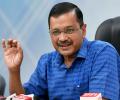
The Delhi High Court has initiated criminal contempt proceedings against several AAP leaders, including Arvind Kejriwal and Manish Sisodia, for their social media posts against a judge in relation to the excise policy case.

The Centre had previously informed the high court it would not take forceful possession of the land by June 5, stating it would follow due legal procedure.

The Supreme Court has directed that a separate open space be provided adjacent to the disputed Bhojshala site in Madhya Pradesh's Dhar for offering namaz on Fridays, pending the final resolution of the case. The court emphasised the sensitive nature of the matter and urged both Hindu and Muslim sides to exercise patience.

The Supreme Court has stated that a complete ban on pellet guns is not possible as long as existing advisories permit their use for crowd control in exceptional circumstances by security agencies. However, the court clarified that allegations of specific misuse can be examined on a case-by-case basis, particularly in light of recent protests against the NEET paper leak.

The Delhi high court has ordered social media companies and online service providers to remove 'false' information circulating online about Indian judges and Union ministers allegedly participating in a badminton tournament in London at taxpayers' expense. The court deemed the content malicious and a systematic misinformation campaign aimed at undermining the judiciary and executive.

The Supreme Court has issued interim directions regarding nationwide protests over the NEET paper leak, ordering the release of minor student protesters without criminal records and directing states to preserve all digital evidence. The court also called for a fair and independent investigation into allegations of police excesses against students, while also acknowledging concerns for injured police personnel.

The Supreme Court was strongly urged to establish a Special Investigation Team (SIT) led by a former judge to investigate alleged police excesses against students protesting the NEET paper leak across various states. The court, while issuing interim directions, restrained states from coercive action against protesters and ordered the release of minors without criminal antecedents.
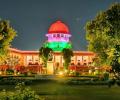
The Centre has asked the Supreme Court to reconsider its judgements decriminalising adultery and same-sex relationships, arguing they were based on a subjective application of 'constitutional morality'.

The Supreme Court has reserved its order on Congress leader Pawan Khera's plea for anticipatory bail in a case related to allegations against Assam Chief Minister Himanta Biswa Sarma's wife.
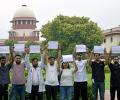
The Supreme Court has refused a plea seeking the NEET-UG 2026 re-test to be conducted in computer-based test mode, citing the National Testing Agency's existing challenges. The court has scheduled the hearing for July 27.

The Centre has informed the Supreme Court that the restriction on women of menstruating age entering Kerala's Sabarimala temple is a matter of religious faith and denominational autonomy, falling outside the purview of judicial review. Solicitor General Tushar Mehta argued that courts should not apply 'secular standards of reason' to religious practices.

The Supreme Court has asked the media to exercise restraint while reporting developments in the death of former model-turned-actor Twisha Sharma, observing that it was pained by the handling of the case.

The Delhi High Court has questioned the Centre's decision to temporarily restrict access to Telegram ahead of the NEET-UG 2026 re-examination, asking how the rights of 150 million users can be curtailed due to concerns over a few miscreants. The court reserved its verdict after hearing arguments from both sides.

The Calcutta High Court has appointed a retired judge as a special officer to manage the day-to-day expenses of the Mamata Banerjee-aligned Trinamool Congress (TMC) from three debit-frozen bank accounts. The accounts were frozen following a complaint by a rival TMC faction alleging they held proceeds of crime. The court allowed transactions for party expenses and legal costs, noting that the initial freezing lacked specific material basis and that the complainant had previously benefited from these accounts.

The Central government has assured the Bombay High Court that it is taking steps to address the LPG shortage caused by the conflict in West Asia. The court accepted the submission and disposed of a petition filed by LPG distributors.

The Supreme Court expressed its 'pain' over the narrative suggesting the judiciary was shielding the accused in the Twisha Sharma death case, assuring a fair, independent, and impartial CBI probe into the former model-turned-actor's death.

The Supreme Court on Friday issued fresh notices to Anil Ambani and the Anil Dhirubhai Ambani Group (ADAG) on a PIL seeking a court-monitored probe into alleged massive banking and corporate fraud involving the firm and its group companies.
